


Global Trade Thaws: How the US-China Tariff Truce Reshapes Indonesia’s Economic Outlook
Main Takeaways
|
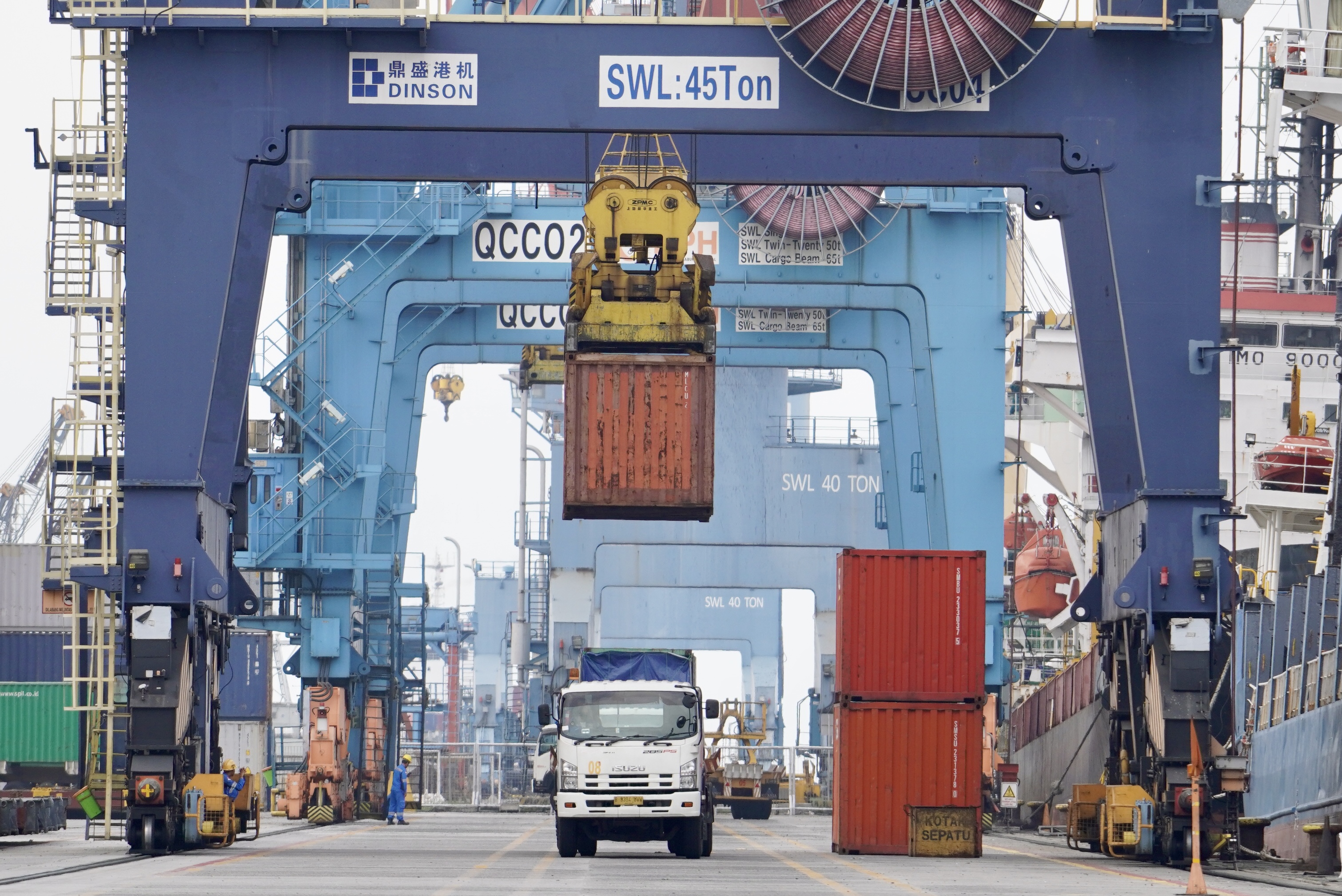
JAKARTA, investortrust.id — The decision by the United States and China to suspend most of their punitive tariffs marks a turning point in global trade tensions and brings a mix of opportunities and challenges for Indonesia.
On Monday, May 12, 2025, the world’s two largest economies agreed to reduce reciprocal tariffs from 125% to just 10%, excluding select items like fentanyl, which remains under a 20% tariff. This truce is expected to boost global economic sentiment, revive commodity prices, and stabilize the rupiah, offering short-term benefits to Indonesia’s trade and fiscal outlook.
Commodity Revival and Rupiah Resilience
“The easing of the US-China trade war sends a positive signal for Indonesian export commodities,” said Bhima Yudhistira, Executive Director of the Center of Economic and Law Studies (Celios). “Rising demand from China’s industrial sector should support Indonesia’s export performance.”
The agreement is also seen as a buffer against further rupiah depreciation. “This helps reduce imported inflation and eases the burden on Bank Indonesia’s foreign exchange reserves,” Bhima added.
Brent crude rose 1.6% to $64.96 per barrel, while West Texas Intermediate (WTI) gained 1.5% to $61.95 per barrel—the highest levels since April 28, 2025. The rebound in oil prices, however, raises fiscal concerns.
Fiscal Risks and Domestic Pressure
Indonesia's 2025 state budget assumes an Indonesian crude price (ICP) of $82 per barrel and a rupiah exchange rate of Rp 15,000 per US dollar. A spike in oil prices, coupled with a weaker rupiah, could widen the budget deficit beyond the projected 2.29% of GDP.
“The government faces a trade-off between maintaining subsidies to protect domestic consumption or sticking to fiscal discipline,” said Syafruddin Karimi, an economist at Andalas University. “And with rising global interest rates, debt servicing costs could also rise.”
Export Competition and Investment Headwinds
Despite the near-term tailwinds, lower US tariffs on Chinese goods may undercut Indonesian exports—particularly in labor-intensive sectors like textiles, garments, and footwear.
“This could lead to Chinese products displacing Indonesian exports in the US market,” Bhima warned. “We may benefit from raw material exports, but not finished goods.”
There’s also concern about potential investment redirection. “If US tariffs on China remain low, manufacturers might re-shore operations to China. That could hurt Indonesia’s bid to attract foreign investment,” Bhima added. Indonesia’s gross fixed capital formation contracted 7.4% quarter-on-quarter in Q1 2025, underscoring the urgency.

A Strategic Pause, Not a Resolution
Muhammad Sirod, a policy adviser to Prabowo-Gibran’s transition team and Kadin executive, described the 90-day tariff truce as a “strategic pause,” not a long-term solution.
“This is a breathing space. If tensions continued, both countries risked economic self-harm,” he said. Sirod emphasized that Indonesia must use this window to strengthen its role in global supply chains and enhance bilateral ties through strategic trade diplomacy.
He called on the Indonesian government to accelerate value-added industries, particularly in electric vehicles, nickel processing, and food security. “The administration under President-elect Prabowo Subianto and Coordinating Minister Airlangga Hartarto has been fairly adaptive in handling this shift,” he noted.

Navigating the Global Chessboard
CORE Indonesia Executive Director Mohammad Faisal echoed the importance of seizing this global opening. “The easing of tensions should lift global trade and economic growth, benefiting Indonesia’s broader export markets,” he said.
However, Faisal cautioned that Indonesia cannot rely solely on secondary effects. “China’s leverage is far greater than Indonesia’s. Washington will not apply the same concessions unless Jakarta negotiates assertively,” he added.
Faisal urged policymakers to pursue a parallel deal with the US to reduce tariffs on Indonesian goods and to monitor import flows from China, Vietnam, and Cambodia, which could harm domestic manufacturers during the negotiation lull.
Bhima recommended that Indonesia use its strategic assets—including the Freeport mining license and copper concentrate export permits—as leverage in bilateral talks. “Indonesia must also bring South China Sea issues into the conversation to bolster its bargaining position,” he said.